Bentley OpenBuildings
Bentley's multidisciplinary BIM software for large-scale buildings and infrastructure, paired with MicroStation and the iTwin digital-twin platform.
Bentley OpenBuildings Designer is Bentley Systems's multidisciplinary BIM authoring platform for large-scale buildings and infrastructure, built on Bentley's MicroStation engine and paired with the broader iTwin digital-twin platform for downstream data use. Bentley itself is a long-established infrastructure-engineering software company whose core strength has historically been civil, structural, and industrial-plant design rather than architecture specifically -- OpenBuildings Designer extends that infrastructure-first pedigree into building design, positioning it differently from Revit or Archicad, which both originated as architecture-first tools.
The product covers architectural, structural, and MEP disciplines in a single multidisciplinary BIM environment, with in-product clash detection for coordinating between those disciplines without exporting to a separate tool like Navisworks. Whole-building energy analysis is built in via EnergyPlus, the U.S. Department of Energy's widely used open-source building-energy-simulation engine -- a notable inclusion, since many competing BIM authoring platforms require a separate plugin or standalone tool for that kind of detailed energy modeling.
Reality-mesh and point-cloud modeling are core capabilities as well, reflecting Bentley's infrastructure and civil-engineering roots, where working from laser-scanned or drone-captured survey data of existing sites and structures is a standard part of the design process rather than a specialized add-on. That capability set is particularly relevant for renovation, retrofit, and infrastructure-adjacent building projects where an accurate as-built starting point matters more than it does on a clean greenfield site.
Digital twin integration via the iTwin platform is arguably OpenBuildings Designer's most distinctive differentiator: rather than treating the BIM model purely as a design and documentation artifact, Bentley positions it as a living, continuously updated digital twin that can feed into operations, facilities management, and infrastructure monitoring long after construction is complete -- a use case Bentley has built out more extensively than most BIM-authoring-focused competitors, reflecting its broader business in infrastructure asset management.
Pricing is steep relative to the rest of this catalog: from $3,844/year for a Virtuoso subscription (one license plus two Keys), placing OpenBuildings Designer at the high end even among established BIM platforms. That pricing, combined with Bentley's traditional focus on large infrastructure owners, engineering firms, and government agencies rather than small architecture practices, signals where the product is realistically aimed -- large-scale, complex, often infrastructure-adjacent building projects rather than typical commercial or residential architecture work.
This catalog's own verified customer references reflect that positioning: named users include CITIC Heavy Industries and CCTEG Beijing Huayu Engineering, both large Chinese industrial and engineering firms rather than boutique architecture studios -- consistent with Bentley's broader customer base of engineering, infrastructure, and industrial-plant organizations rather than the small-to-midsize architecture firms that make up much of Archicad's or Vectorworks's user base.
Bentley's licensing structure is also worth understanding on its own terms: the Virtuoso subscription bundles "Keys," a flexible-access mechanism that lets a subscriber draw on a pool of different Bentley applications rather than a single fixed seat of one product -- a different model than the straightforward per-user, per-product subscriptions Autodesk or Graphisoft sell, reflecting Bentley's broader software portfolio spanning far beyond just building design into civil, structural, and industrial engineering tools.
Editor’s takeBIM•STACK editor's take: OpenBuildings Designer earns a genuine niche for large infrastructure-adjacent building projects where digital-twin continuity into operations matters as much as the design and construction phases -- airports, transit facilities, industrial plants, and similar large public-sector or infrastructure-owner projects are where Bentley's iTwin ecosystem pays off in a way Revit's more design-and-documentation-focused approach doesn't directly replicate. For a typical architecture firm doing commercial or residential work without a strong infrastructure or digital-twin component, however, the cost and Bentley's engineering-first orientation make Revit or Archicad the more natural fit.
OpenBuildings Designer's learning curve reflects its engineering-first, MicroStation-based heritage rather than an architecture-first interface philosophy -- users coming from a civil, structural, or industrial-plant design background at other Bentley products will find the interaction model more familiar than users coming purely from Revit or Archicad. That's a meaningfully different on-ramp than most other tools in this catalog, which skew toward architecture-first interface conventions.
Because the platform spans architecture, structure, MEP, energy analysis and digital-twin data management in one environment, reaching full proficiency across its entire feature set represents a genuinely large scope to master -- realistically, most users specialize in the subset of that toolset relevant to their discipline rather than becoming expert across the whole platform, similar to how large firms staff different specialists across Revit's architectural, structural and MEP toolsets rather than expecting one person to master all three.
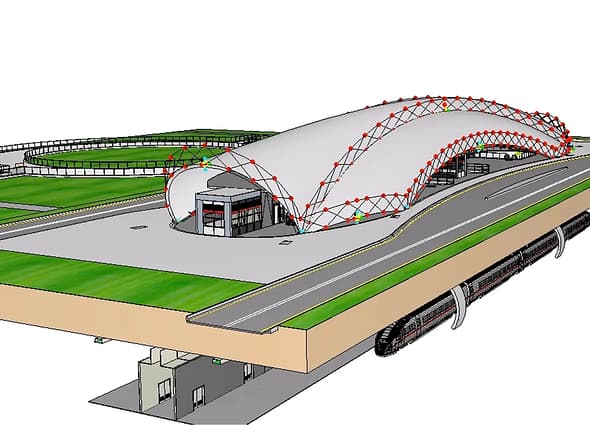
- Large infrastructure-adjacent building projectsAirports, transit facilities, industrial plants and similar large public-sector or infrastructure-owner projects.
- Firms already invested in Bentley's iTwin ecosystemDigital-twin continuity from design through operations is a core differentiator for owners planning long-term asset management.
- Engineering-led multidisciplinary teamsArchitectural, structural and MEP coordination in one environment suits large, engineering-heavy project teams.
- Renovation and retrofit projects needing detailed as-built dataStrong reality-mesh and point-cloud modeling support accurate existing-condition starting points.
- You're a typical architecture firm doing commercial/residential workRevit or Archicad are more architecture-first, with larger talent pools and plugin ecosystems for that project type.
- You need confirmed real-time collaboration and mobile accessThose fields are unconfirmed for OpenBuildings Designer in this catalog -- Revit's or Archicad's collaboration tools are clearly documented.
- Cost is a primary constraintAt $3,844/yr and up, OpenBuildings Designer is one of the priciest tools in this catalog -- Allplan or Archicad may offer better value for similarly capable multidisciplinary BIM at lower cost.
What is Bentley OpenBuildings Designer used for?
Multidisciplinary BIM authoring (architecture, structure, MEP) for large-scale buildings and infrastructure, paired with Bentley's iTwin digital-twin platform for downstream operations use.
How much does OpenBuildings Designer cost?
From $3,844/year for a Virtuoso subscription (one license plus two Keys) -- among the higher-priced tools in this catalog.
Does OpenBuildings Designer include energy analysis?
Yes -- whole-building energy analysis is built in via EnergyPlus, the U.S. Department of Energy's open-source building-energy-simulation engine.
What is the iTwin platform?
Bentley's digital-twin platform, which OpenBuildings Designer integrates with to treat the BIM model as a living asset feeding operations and facilities management beyond design and construction.
Is OpenBuildings Designer good for small architecture firms?
It's better suited to large, often infrastructure-adjacent projects and engineering-led teams -- typical small commercial or residential architecture firms are more likely to find Revit or Archicad a better fit.

