Procore
Construction management platform for project, financial and field teams.
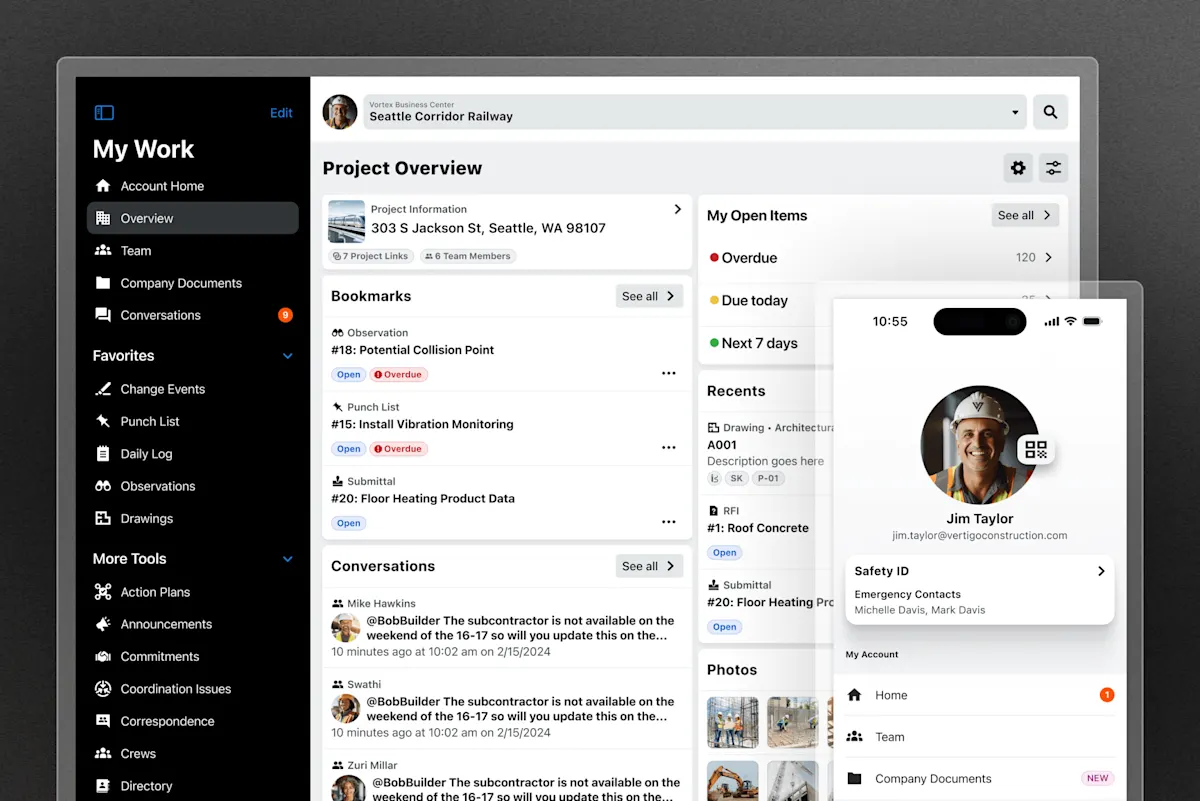
Procore is a cloud-based construction management platform founded in 2002 by Craig 'Tooey' Courtemanche in Carpinteria, California, after he ran into communication and document-tracking problems while building his own house. The platform connects owners, general contractors, and specialty/subcontractors on a single system of record for drawings, budgets, schedules, RFIs, submittals, and daily field activity. Procore went public on the NYSE (PCOR) in May 2021, raising roughly $635 million, and reported revenue of about $1.32 billion in 2025.
The platform is used across the construction industry, but is most strongly associated with large and mid-sized general contractors running commercial, industrial, and multi-project portfolios. Owners and developers use it for cost visibility across a program of projects, project managers and superintendents use it for field-to-office coordination, and subcontractors are frequently brought onto a project's Procore instance for free by the GC holding the license.
Procore is consistently seen as a category leader among general contractors and has repeatedly ranked highly for usability among construction project management platforms. Its strongest reception comes from large general contractors managing complex commercial builds, while feedback from smaller specialty contractors tends to be more mixed.
Procore's reputation is that of the default, enterprise-grade choice -- the platform most large GCs either already use or evaluate first, with the broadest feature set and the largest third-party integration marketplace in the category. That breadth is also the source of its most common criticism: cost and complexity.
Procore's learning curve is real but manageable with structured onboarding. It can be a little hard to use at first -- especially for field staff less accustomed to software-driven workflows -- but built-in video instructions shorten that ramp-up once teams commit to using them.
On the implementation side, a basic Procore configuration typically takes 4-8 weeks, but a fuller rollout -- with RFI workflows, drawing sets, and multi-party permissions fully built out -- commonly takes 3-6 months before both field and office staff are genuinely comfortable using it day-to-day. Procore's own recommended rollout includes inviting users to a test project 2-3 weeks before go-live and running dedicated training sessions about a week prior.
- Large general contractors on complex commercial/industrial buildsThis is the audience driving Procore's strongest reception -- firms with extensive stakeholder coordination needs.
- Owners/developers managing multi-project portfoliosProcore's centralized document control and real-time cost/status visibility across projects is a consistent strength.
- Teams needing tight field-to-office communicationThe mobile app handles real-time photo uploads, daily logs, and instant syncing between jobsite and office well.
- Firms that need one system of record instead of many point toolsProcore eliminates duplicate manual data entry across separate scheduling, budgeting, and document tools.
- GCs who want to bring subcontractors onto one shared platform for freeInvited subcontractors can use Procore at no cost under the GC's account, with unlimited users under Procore's volume-based pricing.
- You're a small or specialty contractor put off by cost and complexityLighter-weight, more affordable tools like Foreman (free to start) or JobTread (~$199/month) are commonly recommended alternatives.
- You're a residential homebuilder or remodelerBuildertrend is the more direct fit for residential contractors, with scheduling, client portals, and subcontractor management built around home-building workflows, at roughly $499-$799/month.
- Your projects are design-driven and BIM/model-coordination-heavyAutodesk's construction platform (Autodesk Construction Cloud, now branded under Autodesk Forma) wins on design-to-construction continuity and model interoperability for BIM-heavy projects.
- You want simple, affordable field-focused scheduling without a full enterprise platformFieldwire (starting around $39/user/month) is a lighter option focused on field task management and punch lists.
- You need transparent, predictable pricing before committingBecause Procore's pricing is fully custom-quoted, firms that need clear upfront pricing may prefer vendors with published per-seat or tiered pricing.
How much does Procore cost?
Procore doesn't publish standard pricing -- it's custom, based on your annual construction volume, average project duration, and type of work. User-reported figures commonly fall between $200 and $1,000+ per month depending on company size and modules used.
Is Procore free for subcontractors?
Subcontractors invited onto a project by a GC's licensed Procore account can use Procore on that project at no cost. A subcontractor wanting their own full, standalone account needs a separate paid annual subscription.
How does Procore compare to Autodesk Construction Cloud?
Procore is positioned as a broader construction management platform with a more intuitive interface and the largest integration ecosystem in the category. Autodesk's construction platform (now part of the Autodesk Forma brand) is anchored in BIM and generally preferred when a project needs tight design-to-construction model coordination.
How long does it take to implement Procore?
A basic configuration can be completed in about 4-8 weeks, but a full rollout -- including RFI workflows, drawing sets, and permissions -- commonly takes 3-6 months before staff are fully comfortable using the system.
Is Procore hard to learn?
There's a real but manageable learning curve. It can be a little hard to use at first, but built-in video training resources shorten the ramp-up, especially for larger firms with dedicated rollout owners.
Who is Procore best suited for -- is it overkill for a small contractor?
Procore's strongest reception comes from large general contractors managing complex, multi-stakeholder commercial builds. Smaller specialty contractors often find it feature-heavy for their needs -- lighter tools like Buildertrend, Foreman, or JobTread are often suggested instead.