Revizto
Issue-tracking and coordination platform that unifies a 3D model with clash and issue management.
Revizto is a BIM issue-tracking and coordination platform founded in 2008 by Arman Gukasyan, headquartered in Lausanne, Switzerland, after he spent years working in 3D GIS and city mapping before turning to construction-specific coordination software. The company launched its dedicated AECO coordination platform in 2012, and has since grown to more than 100,000 AEC professionals across 150 countries relying on it daily, generating roughly $20 million in annual revenue with a 182-person team as of 2025.
The core idea is unifying a project's 3D model with issue tracking and real-time multi-user collaboration in one environment -- rather than exporting clash reports from a separate coordination tool and managing issues in yet another system, Revizto keeps the federated model and the issue log in the same interface, with automated clash detection running continuously against the combined model.
VR walkthroughs extend that coordination workflow into immersive review -- letting a project team walk through the federated model in virtual reality to catch spatial issues that are harder to spot in a flat 2D or desktop-3D view, a meaningful differentiator versus purely desktop-based coordination tools.
Pricing has shifted meaningfully in recent years: Revizto now offers its Viewer and Editor tools free, reserving paid licensing for the deeper per-user or per-project coordination and clash-automation capabilities -- a strategy that lowers the barrier for occasional reviewers (contractors, consultants who just need to view and comment on issues) while still monetizing the core coordination workflow for the teams running it.
Named customers include Stantec and KiwiRail -- a large multidisciplinary engineering firm and a major national rail infrastructure operator, respectively, suggesting genuine adoption on complex, large-scale infrastructure and building projects rather than only small-firm use.
Revizto's issue-tracking data is exportable via BCF (BIM Collaboration Format), the open buildingSMART standard for exchanging coordination issues between different software platforms -- meaning a firm using Revizto internally can still exchange issue data with project partners using a different coordination tool like BIMcollab or Navisworks, rather than being locked into requiring every project partner to also adopt Revizto specifically.
The company has continued to expand Revizto's reporting and dashboard capabilities aimed at project executives and owners who want portfolio-level visibility into coordination issue trends across multiple projects, not just single-project clash counts -- a reflection of Revizto's growing use by larger multi-project organizations rather than only single-project coordination teams.
Editor’s takeBIM•STACK editor's take: Revizto's 17-year history and genuine scale (100,000+ professionals, $20M revenue) make it one of the more established BIM coordination platforms in this catalog, and its free Viewer/Editor tier is a smart way to maximize the number of stakeholders who can engage with a coordinated model without a firm needing to buy a seat for every occasional reviewer. The honest caveat is that Revizto doesn't publish list pricing, so firms should budget for a sales conversation rather than instant self-serve signup when evaluating the paid coordination tier.
Revizto's core coordination workflow -- opening a federated model, reviewing flagged clashes, logging and assigning issues -- maps onto concepts most AEC professionals already understand from other coordination tools like Navisworks or Solibri, so the conceptual learning curve is generally moderate rather than steep.
The free Viewer and Editor tools specifically are designed to require minimal training for occasional users -- a contractor or consultant reviewing and commenting on issues doesn't need deep coordination-tool expertise, while the deeper clash-automation and VR walkthrough capabilities on the paid tier reward more sustained use by a dedicated BIM coordination lead.
Teams adopting the VR walkthrough feature specifically face the added, separate learning curve of VR headset operation itself, which is usually a smaller barrier than it first appears -- most users become comfortable navigating a model in VR within a single session, though establishing a regular VR-review habit as part of a project's coordination workflow takes more deliberate process change than adopting the desktop features alone.
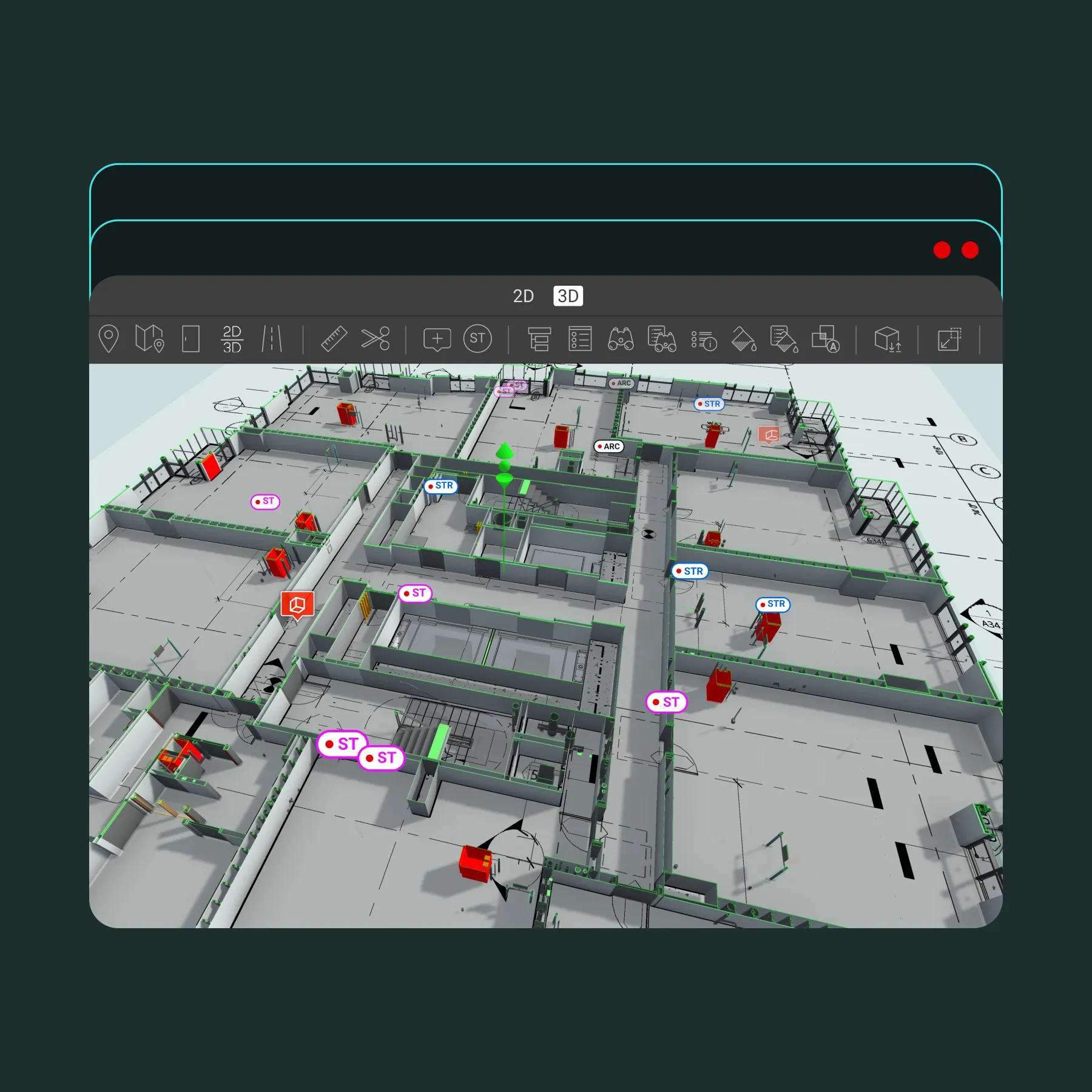
- Multi-firm coordination on complex projectsUnified model-plus-issue-tracking suits large, multidisciplinary coordination workflows.
- Firms wanting to extend free model access to many stakeholdersFree Viewer/Editor tools let contractors, consultants and clients engage without a paid seat each.
- Teams wanting VR-based spatial coordination reviewVR walkthroughs catch issues flat 2D/3D review can miss.
- Large infrastructure and engineering organizationsNamed customers Stantec and KiwiRail demonstrate fit at that scale.
- You need published, self-serve pricingCompare against tools with transparent tiered pricing if a custom sales conversation isn't feasible for your timeline.
- You need rule-based automated IFC model checking specificallySolibri focuses more narrowly and deeply on automated, rule-based model validation.
- You want BCF-native openBIM issue exchange as the primary focusBIMcollab is built specifically around BCF as buildingSMART's open coordination standard.
What is Revizto used for?
Unifying a project's 3D model with issue tracking and real-time collaboration for BIM coordination and clash management.
Is Revizto free?
Viewer and Editor tools are now free; full coordination/clash-automation capability requires per-user or per-project paid licensing.
Who founded Revizto?
Arman Gukasyan founded it in 2008, headquartered in Lausanne, Switzerland; the dedicated AECO coordination platform launched in 2012.
Does Revizto support VR?
Yes -- VR walkthroughs let teams review the federated model immersively for spatial coordination issues.
Who uses Revizto?
Named customers include Stantec and KiwiRail, among 100,000+ AEC professionals across 150 countries.
