
Dalux
Field management and common-data-environment platform strong in the European market.
Dalux is a field-management and common-data-environment (CDE) platform founded in 2005 in Copenhagen, Denmark by brothers Bent and Torben Dalgaard, built on the idea that visualizing complex construction models could challenge outdated ways of working in the construction industry. Notably, Dalux is unfunded and founder-led -- the company has grown organically without external loans or venture funding, an unusual path for a company now serving over 1 million users across 147 countries with 565 employees.
Dalux's earliest product was, by the company's own account, the fastest BIM model-viewing tool available at the time, an early application of games-industry rendering technology to BIM geometry -- a technical foundation that let Dalux enter the emerging Common Data Environment market early with genuinely fast, responsive model viewing as its core differentiator.
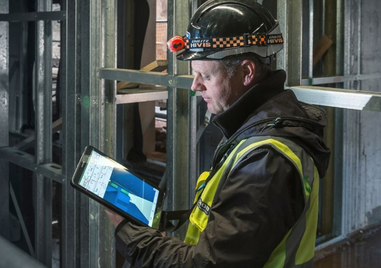
From that viewing foundation, Dalux built out a full platform: Dalux Box serves as the common data environment for document management, 3D model clash coordination lets teams review coordinated models directly, and a mobile-first field app extends the platform to on-site staff specifically -- reflecting Dalux's particular strength in the European market, where mobile field-issue management is a core, well-established use case.
Named customers -- Skanska, WSP, Vinci, Jacobs -- represent some of the largest construction and engineering firms in the world, spanning Swedish, British, French and American origin respectively, suggesting Dalux's European roots haven't limited its adoption to a purely regional customer base.
Dalux also offers a dedicated FM (Facilities Management) module extending the platform beyond active construction into building operations after handover -- letting the same digital-twin and document data captured during construction carry directly into a building owner's ongoing facilities-management workflow, avoiding the common industry problem of valuable as-built project data becoming inaccessible or disconnected once a project moves from construction into operation.
The company's field-app strength specifically extends to safety and quality inspection workflows, letting site teams complete structured checklists and inspections directly from the mobile app with photo documentation attached automatically to specific model locations -- a workflow increasingly required by clients and regulators on public infrastructure work specifically.
Editor’s takeBIM•STACK editor's take: Dalux's unfunded, organically-grown, founder-led history over two decades is a genuinely unusual and credible signal in a category dominated by venture-backed competitors -- growth funded entirely by revenue rather than external capital suggests real, sustained customer value rather than growth-at-all-costs. Its named customer roster (Skanska, WSP, Vinci, Jacobs) confirms adoption well beyond Denmark specifically. The main caveat is that pricing isn't published, so firms should expect a custom quote conversation reflecting Dalux's per-organization pricing model.
Dalux's field-management workflow -- logging issues on site via the mobile-first app, tracking them through resolution, viewing coordinated models via Dalux Box -- maps onto concepts field staff and BIM coordinators already understand from other CDE and field-issue tools, so the conceptual learning curve is generally moderate.
The mobile-first design specifically lowers the barrier for field staff who may have limited desktop-software experience, since the app is built primarily for on-site use rather than as a secondary mobile companion to a desktop-first product -- a meaningful difference in how quickly field teams specifically become comfortable with the tool.
Firms extending Dalux into facilities management after handover face a somewhat larger adjustment, since that phase introduces a different user population (building operators and maintenance staff rather than construction project teams) who need their own onboarding to the platform's FM-specific features, separate from the construction-phase training already completed by the project team.
- Firms needing strong mobile-first field issue managementBuilt specifically around on-site staff use rather than a desktop tool adapted for mobile.
- European construction and engineering firmsDalux's strongest track record and market presence remain concentrated in Europe.
- Large multinational contractors and engineering consultanciesNamed customers (Skanska, WSP, Vinci, Jacobs) demonstrate fit at that scale globally.
- Firms wanting fast, responsive BIM model viewingThe games-technology-based viewing engine remains a genuine performance differentiator.
- You need published, self-serve pricingCompare against tools with transparent tiered pricing if a custom sales conversation isn't feasible for your timeline.
- You need per-project rather than per-organization pricingCatenda Hub prices per project, which can be more economical for firms with fluid project rosters.
- You want the deepest North American reference base specificallyTrimble Connect or Procore may have a stronger, more concentrated US customer track record.
What is Dalux used for?
Field issue and task management, common-data-environment document management, and 3D model clash coordination for construction projects.
How much does Dalux cost?
Custom pricing per organization -- contact sales directly for a quote.
Who founded Dalux?
Brothers Bent and Torben Dalgaard founded it in 2005 in Copenhagen, Denmark.
Is Dalux venture-funded?
No -- Dalux is unfunded and founder-led, having grown organically without external loans or venture capital.
Who uses Dalux?
Named customers include Skanska, WSP, Vinci and Jacobs, among 1 million+ users across 147 countries.
