One Click LCA
AI-powered life-cycle assessment (LCA) and Environmental Product Declaration (EPD) platform for calculating and reducing embodied carbon in construction projects.
One Click LCA is life-cycle assessment (LCA) software for building carbon and environmental-impact analysis, founded in Finland by Bionova Ltd. (the company behind the One Click LCA brand), built around automating what was traditionally a slow, manual, spreadsheet-heavy process of calculating a building's embodied and operational carbon footprint across its full life cycle.
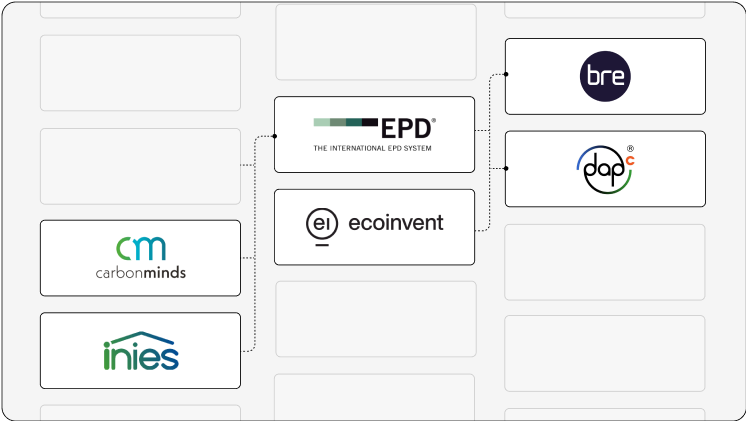
The platform pulls quantity and material data directly from BIM models (Revit and others via IFC) and construction cost-estimating data, then applies environmental product declaration (EPD) databases and regional carbon-factor libraries to calculate a project's carbon footprint automatically -- letting design teams evaluate the carbon impact of material and design choices during design rather than only after the fact.
That automated BIM-to-LCA workflow addresses a genuinely fast-growing need in AEC specifically: building codes and green-certification standards (LEED, BREEAM and increasingly mandatory carbon-reporting regulations in various jurisdictions) are placing growing weight on embodied-carbon reporting, and One Click LCA's large EPD database and automated calculation engine substantially reduce the manual effort of producing that reporting compared to spreadsheet-based methods.
The company has a substantial global customer base spanning architecture, engineering and construction firms, government agencies and certification bodies, reflecting genuine adoption as regulatory and green-building-certification carbon-reporting requirements have expanded meaningfully in recent years across many countries.
One Click LCA's material database also supports comparing generic material categories against specific manufacturer products with published EPDs, letting a design team evaluate whether a specific manufacturer's actual product has a meaningfully better or worse carbon footprint than a generic industry-average assumption for the same material category -- a level of specificity that can directly inform material-selection decisions rather than only producing a final compliance number.
The platform also supports circularity and construction-waste-reduction analysis alongside its core carbon-calculation function, reflecting a broader trend in sustainability software toward covering multiple related environmental-impact metrics in one connected tool rather than requiring separate software for each specific certification or reporting requirement.
Editor’s takeBIM•STACK editor's take: One Click LCA's automated BIM-to-carbon-calculation workflow addresses a genuinely urgent and growing AEC need, and its large EPD database gives it real credibility versus a manual spreadsheet-based approach to life-cycle assessment. Firms working toward LEED, BREEAM or jurisdiction-specific carbon-reporting compliance will find real value here; firms without a current carbon-reporting requirement may find the tool's specific value proposition less immediately pressing, though that's changing quickly as more jurisdictions adopt mandatory reporting.
One Click LCA's core workflow -- importing BIM quantity data and generating a carbon report -- is designed to be approachable for architects and engineers without deep prior LCA expertise, since the automated EPD-matching and calculation engine handles much of the underlying complexity.
Getting the most accurate, actionable results does require some working understanding of life-cycle assessment concepts (embodied versus operational carbon, EPD data quality, system boundaries), so sustainability specialists or trained users generally extract more nuanced insight than a first-time user relying purely on default settings.
Firms new to carbon reporting generally benefit from starting with a single certification target (a specific LEED or BREEAM credit, for instance) rather than attempting comprehensive full-building life-cycle assessment on their first project, building internal LCA fluency gradually across successive projects as the team's comfort with the underlying methodology grows.
- Firms pursuing LEED, BREEAM or similar green certificationAutomated EPD-based calculation directly supports certification carbon-reporting requirements.
- Projects in jurisdictions with mandatory carbon-reporting regulationsGrowing regulatory requirements make automated LCA calculation increasingly necessary rather than optional.
- Design teams wanting real-time carbon feedback during designEvaluate material and design-choice carbon impact before construction, not just in a post-hoc report.
- You need published, self-serve pricingCompare against tools with transparent tiered pricing if a custom sales conversation isn't feasible for your timeline.
- You need building energy-performance analysis rather than embodied-carbon LCA specificallyIESVE focuses on energy and environmental performance simulation rather than material life-cycle carbon.
- You have no current carbon-reporting requirement and want a simpler toolA lighter sustainability-checking tool may be sufficient until a certification or regulatory requirement applies.
What is One Click LCA used for?
Automated life-cycle assessment (LCA) -- calculating a building's embodied and operational carbon footprint from BIM model data.
How much does One Click LCA cost?
Pricing isn't published -- contact sales directly for a quote.
Does One Click LCA integrate with Revit?
Yes -- it pulls quantity and material data directly from Revit and other BIM tools via IFC.
Who makes One Click LCA?
Bionova Ltd., a Finland-based company.
Does One Click LCA support LEED or BREEAM?
Yes -- its automated EPD-based calculation directly supports LEED, BREEAM and similar green-certification carbon-reporting requirements.