Primavera P6
Oracle's enterprise project portfolio management and CPM scheduling platform, used to plan, manage and evaluate large-scale projects, programs and portfolios.
Primavera P6 is Oracle's enterprise project portfolio management and Critical Path Method (CPM) scheduling platform, with roots tracing back to Primavera Systems, Inc., founded on May 1, 1983 by Joel Koppelman, Les Seskin and Dick Faris -- the company's first product, Project Planner (P3), shipped the same year. Primavera grew through a series of acquisitions (Eagle Ray Software Systems in 1999, Evolve Technologies in 2003, ProSight and Pertmaster in 2006) before Oracle acquired the entire company in a deal announced in October 2008 and finalized January 1, 2009.
P6 specifically descends from Eagle Ray Software Systems' enterprise project management technology (dating to 1996), which Primavera absorbed in 1999 -- meaning the scheduling engine underlying today's P6 has a genuinely long, continuously refined development history rather than being a recent product built from scratch.
The platform is built for a different scale than most project-management tools in this catalog: it's designed to scale from a single user up to tens of thousands, with resource and role optimization, integrated risk management, and streamlined enterprise reporting built for organizations running large portfolios of interdependent projects and programs simultaneously, not single-project scheduling for a small firm.
Named users -- ITER Organization (the international nuclear fusion research megaproject) and Assystem (a major global engineering consultancy) -- reflect exactly that scale: P6 shows up on some of the largest, most technically complex, longest-duration infrastructure and research programs in the world, where CPM scheduling rigor and portfolio-level risk management genuinely matter at the scale P6 is built for.
Oracle offers P6 in multiple deployment forms -- an on-premises Professional edition for organizations wanting full local control over their scheduling data, and a cloud-hosted EPPM (Enterprise Project Portfolio Management) edition for organizations wanting centralized, browser-accessible access across distributed teams -- letting large owner organizations choose the deployment model that fits their existing IT and security requirements rather than forcing a single delivery approach.
P6's data model is also widely supported by third-party reporting, analytics and schedule-risk-analysis tools built specifically to consume P6 schedule data, reflecting the platform's status as a de facto data standard in enterprise project controls -- a specialized ecosystem of add-on tools has grown up around P6 specifically, similar in spirit to the plugin ecosystems that have grown around long-established CAD platforms.
Editor’s takeBIM•STACK editor's take: Primavera P6's four-decade lineage and its use on projects as complex as ITER (an international fusion-research megaproject spanning multiple countries and decades) demonstrate a level of enterprise scheduling rigor that few competitors can match -- this isn't a tool built for typical architecture-firm project management, it's built for owners, program managers and major contractors running portfolios of interdependent megaprojects. Firms evaluating P6 should go in expecting genuine enterprise complexity and cost, since Oracle doesn't publish list pricing and the tool's entire design philosophy assumes an organization already running structured CPM scheduling at real scale.
Primavera P6 has one of the steeper learning curves in this catalog, not primarily because of the software interface itself but because getting real value from it requires genuine fluency in Critical Path Method (CPM) scheduling methodology -- a specialized project-controls discipline in its own right, distinct from general project-management skills.
Firms and individuals already trained in CPM scheduling (a common specialization on large infrastructure and industrial megaprojects specifically) generally find P6's interface a natural extension of concepts they already know, while teams without that background face a considerably longer ramp-up, since the software assumes that methodological foundation is already in place rather than teaching it.
Organizations adopting P6 at the enterprise-EPPM level face an additional administrative learning curve beyond individual scheduler training -- setting up the enterprise project structure, resource calendars, security roles and portfolio hierarchies for a large multi-project organization is itself a substantial configuration project, typically requiring dedicated project-controls or IT staff, not just training for the schedulers who will use the finished system day to day.
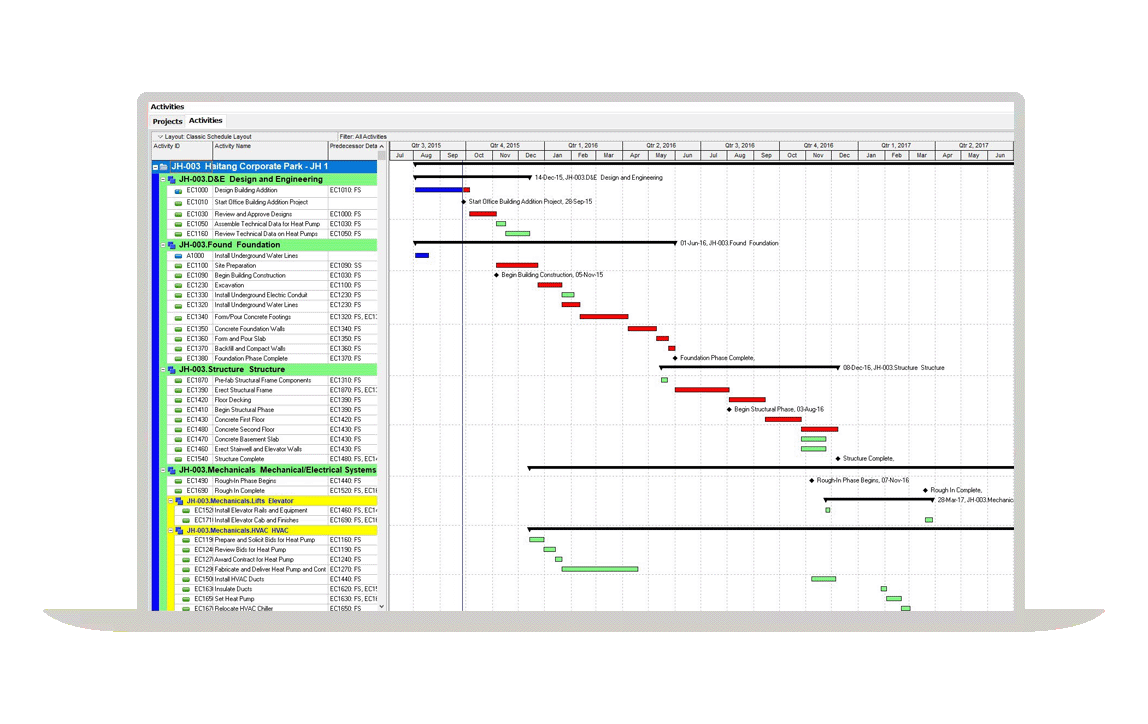
- Owners and program managers running large project portfoliosBuilt specifically for enterprise-scale, multi-project, multi-program complexity.
- Major infrastructure and industrial megaprojectsNamed user ITER demonstrates fit at the largest, most technically complex project scale.
- Organizations with dedicated CPM scheduling staffThe tool assumes and rewards genuine Critical Path Method scheduling expertise.
- Large engineering consultancies managing many concurrent client programsNamed user Assystem reflects that enterprise-consultancy use case.
- You need simpler, single-project schedulingA lighter project-management tool avoids P6's enterprise-scale complexity and cost for firms that don't need it.
- You want published, self-serve pricingCompare against tools with transparent tiered pricing if a custom Oracle sales conversation isn't feasible for your timeline.
- Your team lacks dedicated CPM scheduling expertiseA more general project-management tool may fit better than one that assumes that specialized methodology already in place.
What is Primavera P6 used for?
Enterprise project portfolio management and Critical Path Method (CPM) scheduling, built to scale from one user to tens of thousands.
How much does Primavera P6 cost?
Oracle doesn't publish list pricing -- contact sales directly for a quote.
Who owns Primavera P6?
Oracle Corporation, which acquired Primavera Systems, Inc. in a deal announced October 2008 and finalized January 1, 2009.
Who founded Primavera Systems?
Joel Koppelman, Les Seskin and Dick Faris founded it on May 1, 1983.
Who uses Primavera P6?
Named users include ITER Organization (the international nuclear fusion megaproject) and Assystem, a global engineering consultancy.
